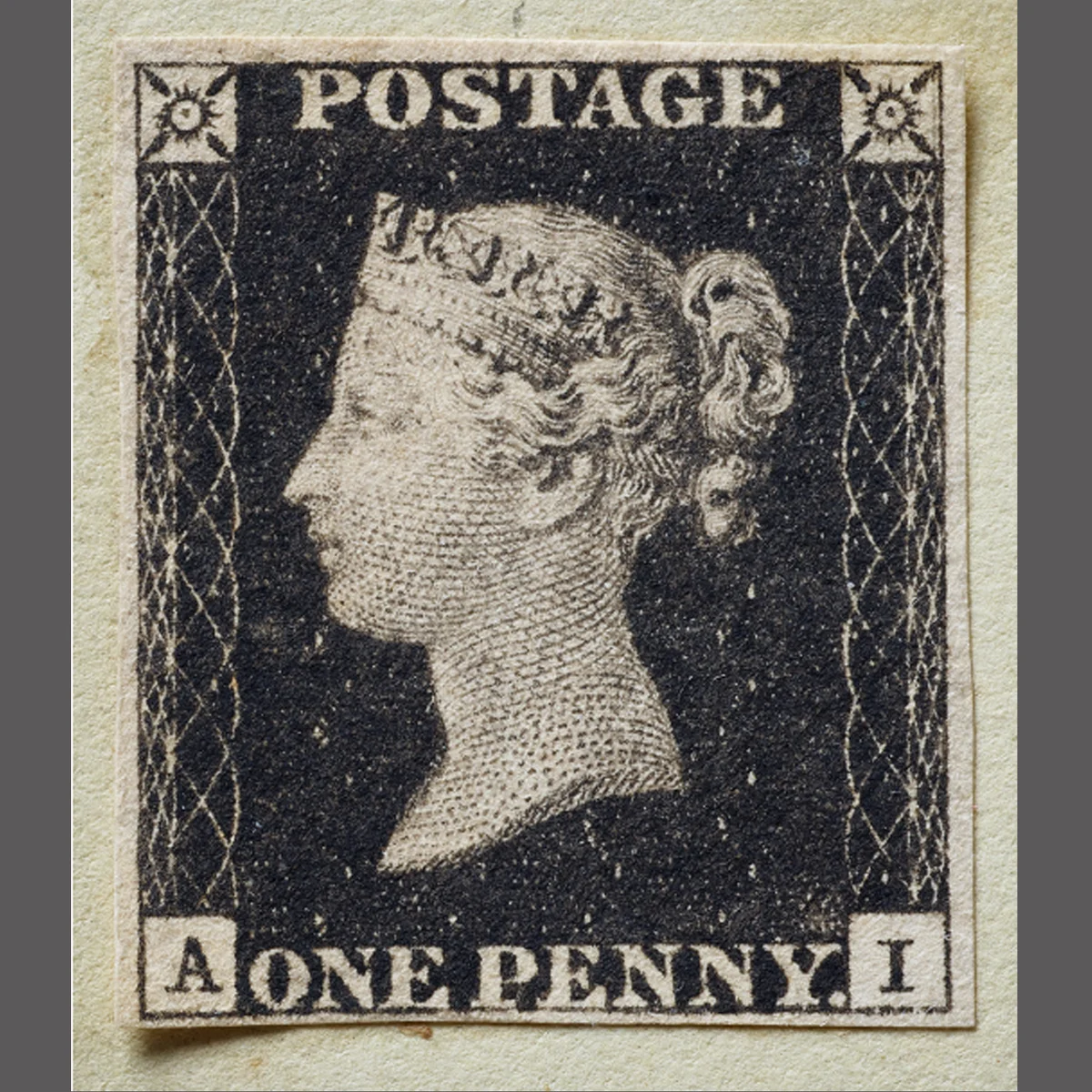
It’s been 185 years since the Penny Black first showed up in 1840, and even if you aren’t a “serious” philatelist, this is the one stamp everyone knows. Before this little black bit of paper existed, sending a letter was a total mess, the person receiving the letter had to pay for it, and the price changed depending on how many pages you wrote and how far it had to travel.
Sir Rowland Hill basically fixed the postal service by suggesting a flat rate of one penny, paid for upfront with a stamp. Simple, but it changed everything.
I don’t actually own a Penny Black yet, it’s definitely one of those holy grail stamps for me. Seeing one in person is always a bit surreal because they look so much smaller than they do in photos, and compared to the bright stamps I usually go for, if it wasn’t for the history behind it, I’d not be that interested in it at all.
One thing I’ve noticed is that whenever stamps come up on the TV like The Chase or just general trivia, the answer is almost always the Penny Black. It’s become the default stamp question for everyone who doesn’t actually collect them, which I find quite funny, but I suppose it makes sense given it’s where everything started.
Why is it black, and why did they stop?
The design is classic, a young Queen Victoria based on a medal from the time. They printed them in sheets of 240, and because they didn’t have perforations yet, someone had to sit there with a pair of scissors and cut them out by hand.
This is why, if you’re looking to buy one today, the margins are everything. If the scissors slipped and cut into the design, the value drops. You’re looking for four margins, basically a clear white border all the way around.
The problem with red is that they used red ink for the Maltese Cross cancellation marks to show the stamp had been used. The problem was that people figured out how to clean the red ink off the black background and reuse the stamps. By 1841, they switched to the Penny Red and used black ink for cancellations instead because it was much harder to scrub off.
The Plate 11 Hunt
Between May 1840 and February 1841, they went through 11 different printing plates. Most of them are fairly common, as far as 180-year-old stamps go, but Plate 11 is the big one. They only used it for a tiny amount of time before switching to the Penny Red, so if you find a Penny Black that was printed from Plate 11, you’ve hit the jackpot.
Personally, as a casual collector, I find the whole plate hunting side of things a bit too intense. I can appreciate that people love the technical hunt for plate numbers, but for me, it’s more about the history and just how the stamp looks on the page rather than squinting at tiny variations for hours.
How I’d store a Penny Black
If I ever got my hands on a really nice Penny Black, there is no way I’d be using a hinge on it. As I’ve said before, I’m a mount person all the way.
Even though the Penny Black isn’t exactly colourful like my mushroom stamps, I think it would look incredible against a black background mount. The black-on-black look would really highlight the engraving detail and those tiny corner letters.
The Penny Black is the reason we’re all here. It turned a complicated, expensive system into a hobby that anyone could join. 1.3 million of them are thought to still exist, so while they aren’t exactly rare in the grand scheme of things, they are still the ultimate piece of history for any stockbook.
