The 1985 Laos mushroom stamp series is a fascinating case in philately, notable for its detailed illustrations of various fungi species. However, these stamps are classified as “illegal issues” by the Universal Postal Union (UPU) and are listed as such on platforms like Colnect.
Overview of the 1998 Somali Republic Mushroom Stamps
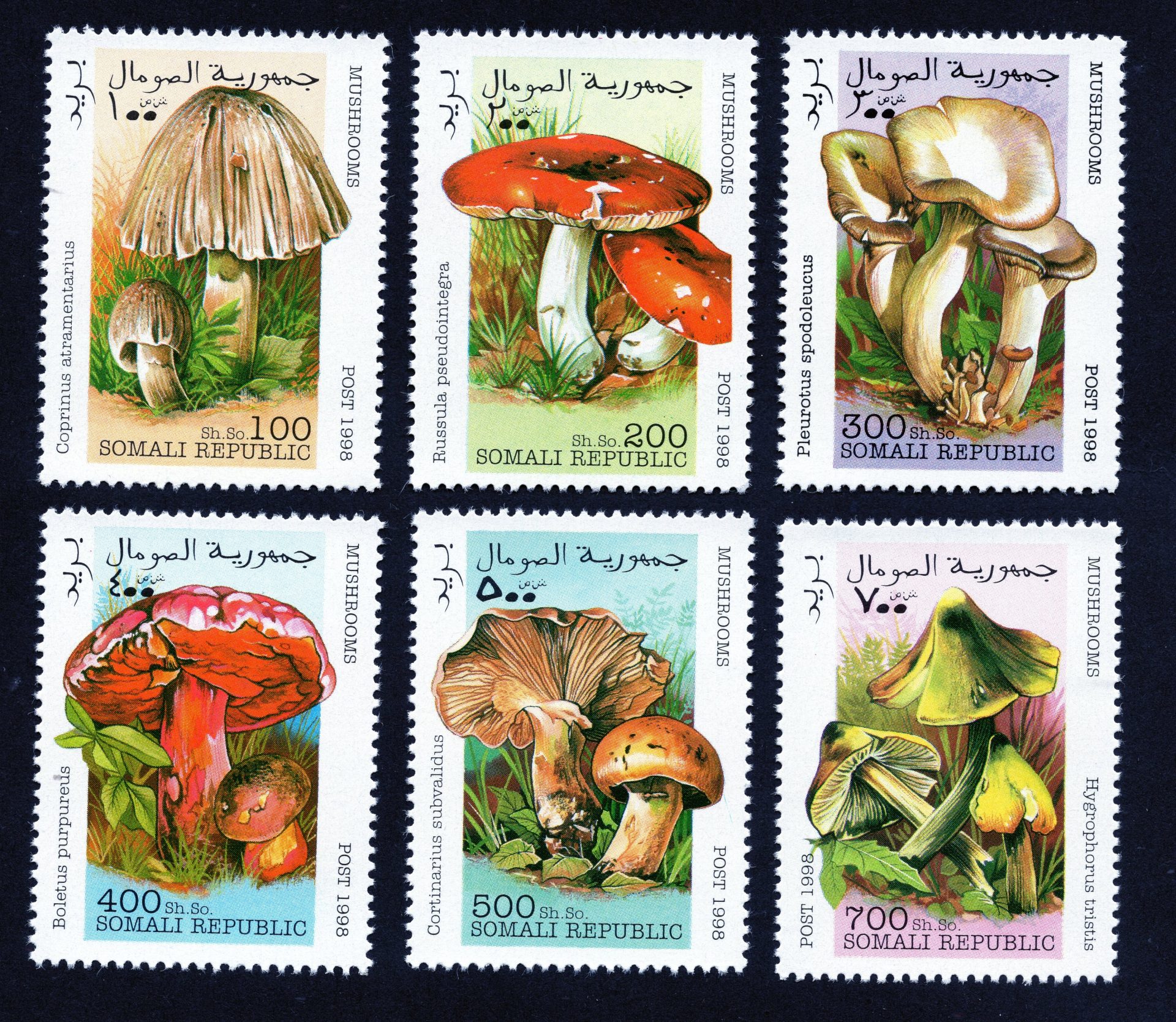
InIn 1998, a series of six postage stamps was released under the name of the Somali Republic, each depicting a different mushroom species with detailed illustrations. The species featured include:
- Coprinus atramentarius
- Russula pseudointegra
- Pleurotus spodoleucus
- Boletus purpureus
- Cortinarius russeoides
- Amanita muscaria
Each stamp displays the species’ scientific name alongside Arabic script, with denominations ranging from 100 to 500 Somali shillings. The artwork is detailed, showcasing the mushrooms in natural settings.
Why Are These Stamps Considered Illegal?
The legitimacy of these stamps has been a topic of debate among philatelists. According to information from Golowe’s Collector Stamps, these mushroom stamps are considered “illegal stamps,” meaning they were produced without official authorization from the Somali postal authorities. The term “illegal stamps” refers to labels that are produced and issued without the authorization of the legitimate postal administration of a country. These unauthorized stamps often mimic official issues in design and theme, making it challenging for collectors to discern their legitimacy.
The Universal Postal Union (UPU) has identified such issues and maintains a list of illegal stamps to inform collectors and postal administrations. These unauthorized stamps often mimic official issues in design and theme, making it challenging for collectors to discern their legitimacy.
For more information, you can read my blog on counterfeit and fraudulent stamps.
