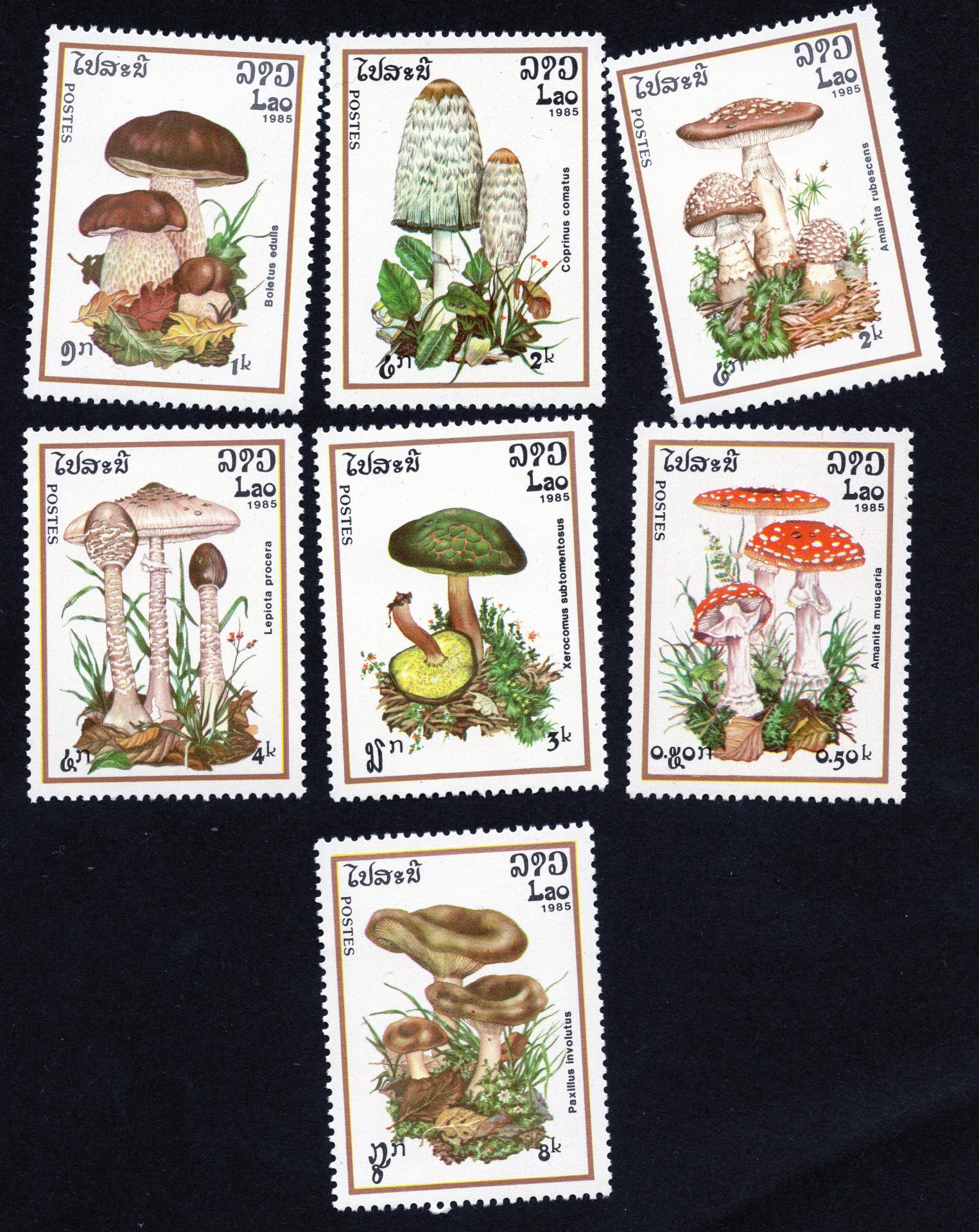
I’ve been slowly building my collection of mushroom-themed stamps, and this set from Laos is a great example of the kind of detailed, thematic design that was popular at the time. Issued in 1985, it’s full of earthy colors, carefully labelled Latin names, and that classic layout that so many Southeast Asian stamps from the decade share.
As with the Cambodia and Somali Republic sets, these stamps were likely produced for the collector’s market rather than everyday post. But that doesn’t take anything away from how beautifully illustrated they are. Each stamp captures a different species of mushroom in its natural setting, with a delicate balance of botanical accuracy and artistic style.
What’s on the stamps?
There are seven stamps in the full set, ranging from recognizable edible species like porcini and parasol mushrooms to a few lesser-known but equally lovely varieties. If you’re doing mycophilately, this is another winner!
| Stamp Value | Latin Name | Common Name | Notes | Toxic? |
|---|---|---|---|---|
| 0.50k | Amanita muscaria | Fly agaric | Iconic red cap with white spots | Yes |
| 1k | Boletus edulis | Porcini | Popular edible mushroom found in forests | No |
| 2k | Coprinus comatus | Shaggy ink cap | Deliquesces into ink-like liquid as it ages | No |
| 2k | Amanita pantherina | Panther cap | Similar to fly agaric, toxic and hallucinogenic | Yes |
| 3k | Xerocomus luteus | Slippery Jack | Sticky cap, usually found near pine trees | No |
| 4k | Lepiota procera | Parasol mushroom | Tall and striking, edible when young | No |
| 8k | Psalliota volutipes | Possibly Agaricus sp. | Older genus name, likely edible | No |
“Psalliota” is an outdated name now, I think. Most species are now part of the Agaricus genus, which includes familiar edibles like the common field mushroom.
One of the more interesting stamps in the set shows Coprinus comatus, also known as the shaggy ink cap or lawyer’s wig. It’s a tall, scruffy-looking mushroom with a bell-shaped cap that starts off clean and white before breaking down into black ink as it matures. That process called ‘autolysis’, means it doesn’t stick around for long, which makes it tricky to collect but that doesn’t matter for stamps. The artwork catches it at just the right moment, before it collapses in on itself. Mental.
Take a look at the entire Mushrooms, Molds and Fungi list!
While I was looking for other mushroom stamps, I found another website that helps you find the stamps you have – stampdata.com 🙂
