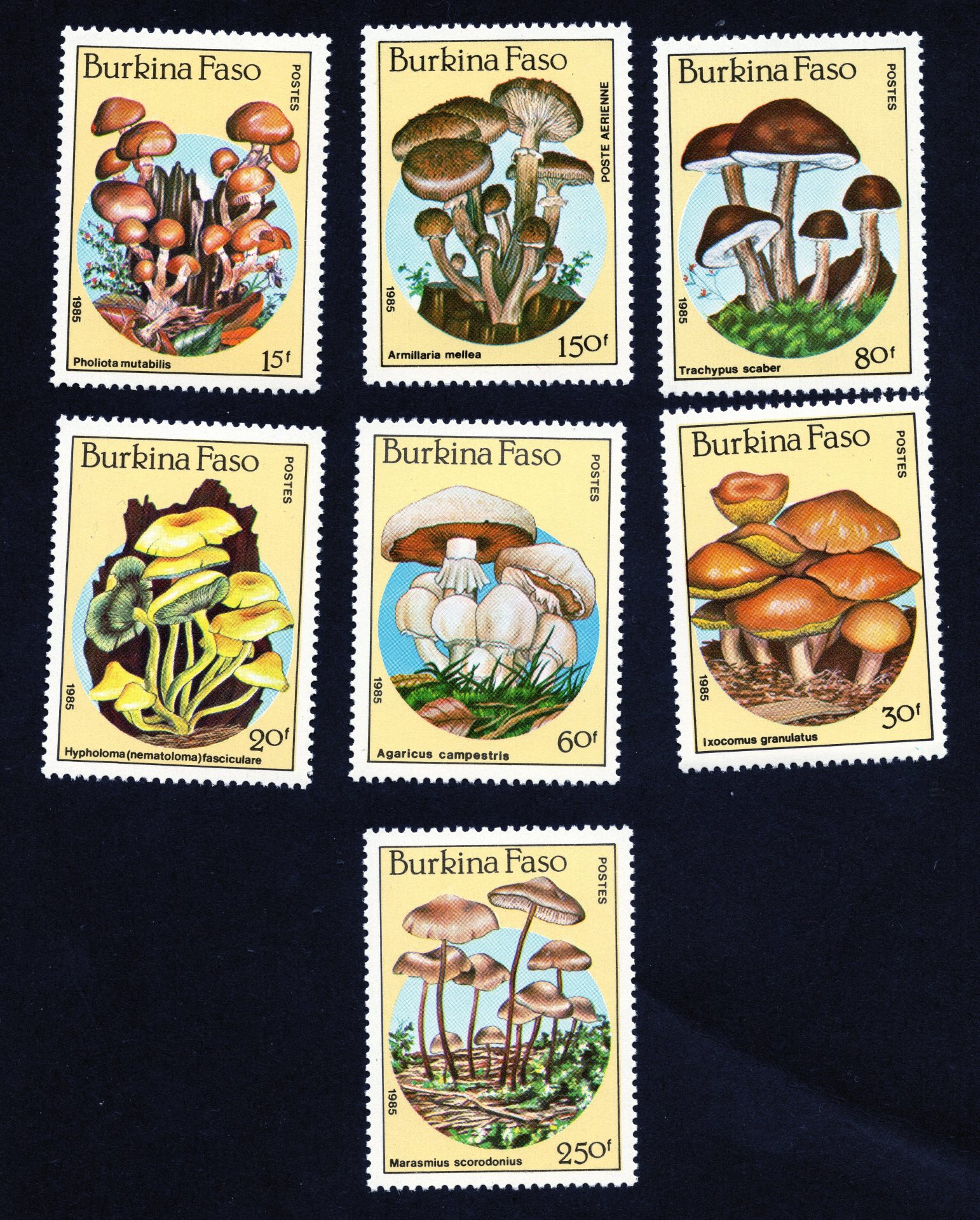
In 1985, Burkina Faso issued a beautiful and detailed set of postage stamps featuring various species of mushrooms (fungi).
This issue showcases both edible and wild mushrooms, depicted with scientific accuracy and vivid artistry.
The set includes seven stamps: six for regular domestic or international mail, and one specially designated for airmail use (“Poste Aérienne”).
At that time, Burkina Faso, like many countries, maintained a distinction between standard surface mail and airmail, reflecting the different postal services available.
Table of Stamps
| Face Value | Botanical Name | Common Name | Mail Type |
|---|---|---|---|
| 15f | Pholiota mutabilis | Sheathed Woodtuft | Domestic (Postes) |
| 20f | Hypholoma fasciculare | Sulphur Tuft | Domestic (Postes) |
| 30f | Suillus granulatus (Ixocomus granulatus) | Granulated Bolete | Domestic (Postes) |
| 60f | Agaricus campestris | Field Mushroom | Domestic (Postes) |
| 80f | Tricholoma vaccinum (labelled Trachypus scaber on the stamp) | Scaly Knight (or Woolly Milkcap) | Domestic (Postes) |
| 150f | Armillaria mellea | Honey Fungus | Airmail (Poste Aérienne) |
| 250f | Marasmius scorodonius | Garlic Marasmius | Domestic (Postes) |
You can find lots of information about mushrooms in the Index Fungorum.
Important Notes:
- Botanical Corrections:
- “Trachypus scaber” as written on the 80f stamp seems to be a mistake or outdated name; it is now identified under Tricholoma vaccinum.
- “Ixocomus granulatus” is an old synonym for Suillus granulatus.
- Mail Type:
- “Postes” stamps were for standard domestic or international mail.
- “Poste Aérienne” stamp (150f, Armillaria mellea) was intended for airmail, typically for faster or international delivery.
Artistic and Botanical Significance
This 1985 mushroom series is noteworthy for:
- Scientific representation: Despite minor errors in Latin names (common in older stamps), the species are carefully chosen and well illustrated.
- Educational aim: By showcasing edible and wild fungi, the set likely had an educational purpose, especially in rural communities where mushroom knowledge affects food gathering practices.
- Art style: The artwork uses soft, slightly muted colours and delicate line work typical of 1980s stamp design, especially in African countries influenced by French printing houses.
Many African countries in the 1980s issued natural history themes (animals, plants, fungi) to appeal both to local needs and to international collectors (especially European philatelists)
If you loved this post, you’ll definitely like the Fungi, Mushrooms and Molds category.
