
Stamps are vulnerable to their surroundings. Paper, gum, and ink can all be affected by light, humidity, temperature changes, and even the materials used to store them. Over time, these factors can fade colours, make paper brittle, or cause stains that can never be removed.
A Guide on How to Store Postage Stamps
The way you store a collection makes a lasting difference. Albums, stock books, glassine envelopes, binders, and archival boxes each have their strengths, but none of them can protect stamps completely without the right environment and handling. Safe storage depends on both the method you choose and the conditions you keep it in – avoiding direct sunlight, controlling humidity, and using archival-quality materials that will not damage paper or ink.
This guide takes you through every major storage method and explains the reasons behind each environmental rule. The aim is to be practical and straightforward. With the right approach, a collection can be kept in good condition for decades, ready to be enjoyed by you and by future collectors.
Albums
Albums organise stamps and keep them in order. They are the most traditional storage method and remain a favourite for many collectors. The type of album you choose will shape how you interact with your collection.
Pre-printed albums
This type of album has the pages already laid out, usually by country or theme. They make it easy to see what you own and what you are missing. This structure is satisfying, but it can feel limiting if your collection grows in an unexpected direction. I get a lot of this type of album when I buy glory boxes off eBay or when I’m rooting around in charity shops. I’ve also often see people copy this format when they create a stamp display for an exhibition or fair.
Blank albums
Blank albums provide basically the opposite experience. They are flexible but require more effort, since you need to supply hinges or mounts. Quality matters here, poor paper or plastics will cause yellowing, staining, or other damage over time.
Most cheap papers are not acid-free. They contain lignin (a natural component of wood pulp). Over time lignin breaks down and releases acids into the paper. Those acids migrate into anything touching it, including stamps. The result is yellowing, staining, and weakening of fibres. That’s why old newspapers turn brown so quickly compared to archival-quality paper.
Cheap plastics like PVC (polyvinyl chloride) contain plasticisers, which are chemicals added to make the material flexible. As PVC ages, those plasticisers leach out. They can leave an oily film on the surface, and in contact with stamps they cause staining, tackiness, or even fusion of the stamp to the plastic.
Hingeless albums
You might prefer hingeless albums for mint stamps because each space comes with a protective mount already fixed in place, so there is no need to use hinges. This means less direct handling and a lower risk of accidents.
DIY albums
These are the most creative option. Collectors often use binders with acid-free sheets, designing layouts themselves. This offers full control but also places responsibility on the collector. Using the wrong materials can do more harm than good. With plain pages, you can arrange stamps however you like. The ones with the little squares on are the best because they help you align your stamps on the page and keep everything need.
Albums are excellent for structure and presentation, but their safety depends on the quality of the paper and plastics used in their construction.
Stockbooks
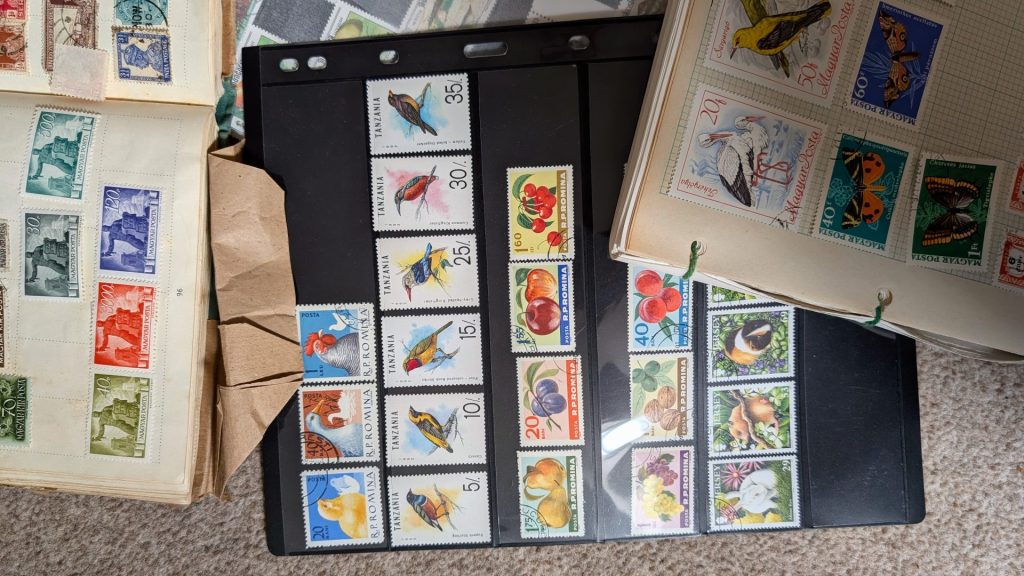
Stockbooks look similar to albums but work differently. Instead of printed spaces, the pages are lined with horizontal strips made from glassine or plastic. You slide stamps behind the strips, which holds them in place without adhesive.
The appeal of stockbooks is flexibility. You can move stamps around freely without the risk of tearing hinges or damaging mounts. This makes them a practical choice for working collections, duplicates, or stamps you are still sorting.
However, stockbooks are not always ideal for permanent storage. The strips can warp over time if the book is cheaply made, and not all plastics are archival. High-quality stockbooks will serve well for years, but valuable or delicate stamps are safest in mounts or archival pages designed for long-term preservation.
Stock Pages
Stock pages are loose-leaf sheets fitted with clear pockets. They are designed to fit into binders and come in a variety of layouts, from small rows for individual stamps to large pockets for miniature sheets or covers.
A well-known version of these is the Vario sheet, made by the company Lighthouse (Leuchtturm). Because this brand is so widely used, collectors often refer to stock pages in general as “Vario sheets,” even if they are made by another manufacturer such as Prinz, Hagner, or Stanley Gibbons.
These pages are modular and expandable, which makes them a flexible choice for collections that grow in many directions. When purchased from reputable manufacturers, they are usually made from archival plastics like polyester or polypropylene, which are safe for long-term use.
When paired with binders and slipcases, stock pages can be one of the most practical and reliable systems for organising and protecting a stamp collection.
Glassine Materials
Glassine is a smooth, semi-transparent, acid-free paper. It has been used in philately for decades because it is lightweight and protective without being completely airtight.
Glassine envelopes are commonly used for temporary storage, trading, or transport. They are safe and inexpensive, which makes them useful for duplicates or stamps you are preparing to mount.
Glassine sheets are often placed between album pages to prevent stamps from sticking to each other.
Glassine does not block out humidity, so it is best thought of as a short to medium-term solution rather than a permanent one.
Mounts
Protective mounts are small sleeves made from archival plastic. Brands such as Hawid or Showgard are widely used. You cut the mount to size, affix it to an album page, and slide the stamp inside.
Mounts protect mint stamps by keeping the gum away from direct contact with paper. They also hold stamps securely without adhesive. Collectors can choose between clear mounts, which allow the page design to show through, and black mounts, which provide a background.
Mounts require careful trimming to avoid curling, but when used correctly they are one of the safest ways to display stamps long-term.
Binders and Slipcases
Binders are often used with stock pages or custom album sheets. They allow a collection to grow and remain flexible. A slipcase is a cover that slides over the binder, shielding it from dust and stray light.
This combination offers both accessibility and extra protection. Slipcases are especially useful if albums are kept on open shelves.
Approval and Stock Cards
Approval cards, also called stock cards, are stiff cards fitted with glassine or plastic strips. They are widely used by dealers to store and display small groups of stamps.
These cards are portable, cheap, and easy to label, which makes them useful for temporary storage or for trading. However, they are not designed for archiving, since stamps can shift or press against each other if handled too much.
Archival Boxes
For bulk storage, acid-free archival boxes are a reliable option. Collectors often use them to house covers, postcards, or duplicates stored in glassine envelopes.
Because they are made from museum-quality board, they protect contents from dust and light. They can also be labelled clearly, which makes large collections easier to manage.
Specialty Albums
Different parts of a collection sometimes need specialised storage.
- Cover albums are designed for First Day Covers (FDCs) and postal history items.
- Sheet albums are made to hold entire panes or sheets of stamps.
- Exhibit pages are archival sheets used for competitive display.
Using the right type of album helps prevent damage that comes from forcing items into spaces they were not designed to fit.
The Science of Preservation
Even the best album or stockbook will not protect stamps if they are kept in poor conditions. Understanding the main environmental risks is just as important as choosing the right storage method.
Light
Ultraviolet light causes pigments in stamp ink to break down, which makes colours fade. Reds often turn pink, blues lose their depth, and blacks can shift towards brown. Light also weakens paper fibres, leaving them brittle. Mint gum is especially vulnerable, since light and heat can cause it to crack or discolour.
For this reason, stamps should be stored away from direct sunlight and preferably inside closed cases or boxes.
Humidity
Paper responds directly to moisture in the air. In damp conditions it swells, and in dry conditions it contracts. Over time, these cycles cause stamps to curl or warp.
Excess humidity also encourages mold and mildew, which appear as permanent brown spots called foxing. Mint stamps with gum may stick to album pages or to each other. Adhesives from hinges and mounts can also spread in damp conditions, leaving stains.
On the other hand, very dry air makes paper brittle. Stamps stored in such conditions are prone to cracking and tearing. The ideal humidity level is between 40 and 55 percent, with as little fluctuation as possible.
Temperature
Heat speeds up chemical deterioration. High temperatures accelerate the breakdown of paper fibres, inks, and gums. Rapid temperature changes are equally harmful, since expansion and contraction put stress on paper and adhesives. Stamps should be stored in cool and stable conditions. Attics, basements, and garages are unsuitable because they experience extreme fluctuations.
Air Quality
Pollutants in the air, particularly sulphur dioxide, react with paper and ink, causing discolouration. Smoke from tobacco or fires can permanently stain stamps and seep into albums. Dust particles also build up inside storage systems, scratching surfaces and dulling their appearance. A clean, ventilated storage space is essential.
Materials
Not all plastics and papers are suitable for stamps. PVC plastics contain plasticisers that migrate over time, leaving greasy marks or causing stamps to fuse to the material. Acidic paper causes yellowing and weakens fibres.
The safest choices are polyester (often sold as Mylar or Melinex), polypropylene, and polyethylene. For paper products, always choose acid-free and archival-quality.
Handling
Even careful handling can harm stamps. Natural oils, salts, and moisture from skin leave invisible marks that attract dirt. Pressure from fingers can crease perforations or thin paper.
Collectors should always use stamp tongs or tweezers to move stamps.
Pests
- Insects such as silverfish and cockroaches will eat paper and glue. Rodents can chew through entire storage boxes.
- Stamps should be stored in sealed and clean environments, with occasional inspection to catch problems early.
Safety
Water and fire are the greatest threats to valuable collections. For high-value items, collectors often use fireproof and water-resistant safes or safety deposit boxes.
It is also sensible to keep digital scans of a collection for insurance purposes.
Long-Term Archival Strategies
For collections intended to last for decades or generations, the best approach combines secure storage methods with stable conditions.
- Archival Mylar sleeves provide museum-grade protection for individual items.
- Climate-controlled cabinets are sometimes used for rare or high-value collections.
- A digital catalogue is essential, both for organisation and for insurance.

