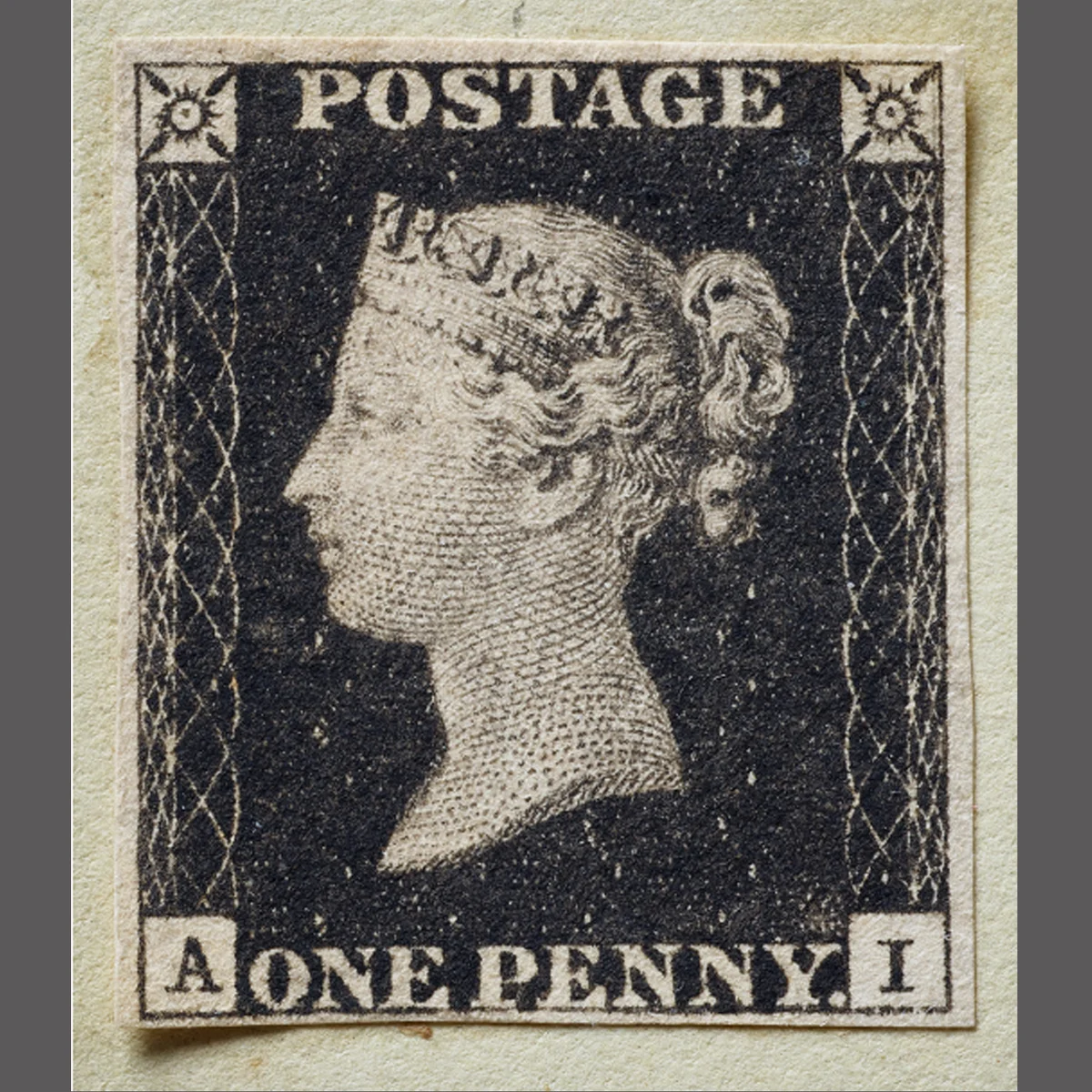
It’s been 185 years since the Penny Black made its debut, and collectors around the world are reflecting on its impact. Whether you own one or just admire it from afar, the Penny Black remains a powerful piece of postal history.
In May 1840, something small changed the way we communicate. The Penny Black was the world’s first adhesive postage stamp. At just one penny, it introduced a brand new way to send letters. It was simpler, cheaper and more accessible to more people.
The Genesis of the Penny Black
Before the advent of postage stamps, the cost of sending a letter was borne by the recipient, with rates varying based on distance and the number of sheets. This system was often inefficient and discouraged correspondence. In 1837, Sir Rowland Hill proposed a uniform penny postage system, advocating for prepayment by the sender using adhesive stamps. His ideas were detailed in his pamphlet, “Post Office Reform,” which emphasized the need for a more accessible and standardized postal system.
The British government embraced Hill’s proposals, leading to the issuance of the Penny Black on 1 May 1840, with official usage commencing on 6 May 1840. This stamp allowed letters weighing up to half an ounce to be sent anywhere within the United Kingdom for a flat rate of one penny, democratizing communication across the nation.
If learning about how we got to now in philately is interesting to you, you might like reading my history of stamp collecting post.
Design and Production
The design of the Penny Black features a profile of Queen Victoria, based on a sketch by Henry Corbould, which in turn was inspired by a medal engraved by William Wyon. The engraving work was executed by Charles and Frederick Heath, resulting in a detailed and dignified portrayal of the young queen.
Printed by the firm Perkins, Bacon & Petch, the stamps were produced in sheets of 240, arranged in 20 rows of 12. Each stamp included unique corner letters to indicate its position on the sheet, serving as a security measure against forgery. The stamps were imperforate, requiring postal clerks to cut them manually, which often resulted in irregular margins.
To prevent reuse, the stamps were canceled using red ink in a distinctive “Maltese Cross” design. However, the red cancellations were sometimes difficult to see against the black background, leading to the introduction of the Penny Red in 1841, which used black ink for cancellations.
Production Challenges and Plate Variations
The initial printing plate, known as Plate 1, experienced rapid wear due to the absence of hardening, necessitating repairs and resulting in two distinct states: Plate 1a and Plate 1b. Subsequent plates were hardened to improve durability. In total, 11 plates were used to produce over 68 million Penny Black stamps between May 1840 and February 1841. Collectors often seek stamps from specific plates, with Plate 11 being particularly rare and valuable. Read more about these details at Stanley Gibbons
Commemorations and Legacy
The Penny Black’s significance has been celebrated through various commemorative issues. In 1990, Royal Mail released a set of stamps marking the 150th anniversary, and in 2020, a miniature sheet commemorated the 180th anniversary. As of now, no official announcement has been made regarding a 185th-anniversary issue, but collectors and enthusiasts continue to honor this milestone through exhibitions and special events.
The Penny Black Today
Despite the vast number of Penny Blacks originally produced, their survival rate is estimated at around 1.3 million, with fewer in pristine condition. Factors such as plate number, margin size, cancellation clarity, and overall condition influence their value. While used examples can be acquired for modest sums, mint condition stamps or those on original covers can command significant prices
I try my best to keep up to date with the latest stamp news. Feel free to get in touch if you’d like me to feature your website on my blog or would like to do some writing 🙂
