What is a Definitive Postage Stamp?
Definitive stamps are regular-issue postage stamps produced in large quantities for everyday use. Unlike commemorative stamps, which are issued for limited periods, definitives are available for extended periods and are reprinted as needed to meet demand. They typically feature national symbols, monarchs, or other significant figures and serve as the standard postage for routine mail.
Why Definitive Postage Stamps Matter
Definitive are essential for postal operations. Issued in multiple denominations, they reduce the need to combine stamps for everyday mailing. Their consistent design and long availability make them vital to collectors and postal historians alike.
U.S. Definitive Stamp Series: Washington–Franklin, Prexies & Forever Stamps
Washington–Franklin Issues (1908–1922)
The Washington–Franklin series was a landmark definitive issue in U.S. postal history, issued from 1908 until 1922. Each stamp featured either a profile portrait of George Washington or Benjamin Franklin. While the basic design remained consistent, postal experimentation led to numerous variations in paper types, watermark configurations, perforation gauges, and printing processes. The Post Office used flat-plate presses initially, then moved to rotary and offset presses, all of which introduced slight differences in stamp appearance.
Watermarks included double-line and single-line “USPS” patterns, with variants printed on unwatermarked stock as well. Perforations began at gauge 12, then shifted to gauge 10 when 12 proved too fragile, and later to gauge 11 when gauge 10 made stamp separation difficult. Collectors now identify these variants more than 200 major types, along with numerous minor distinctions by carefully measuring perforations, observing paper and watermark, and noting differences in printing style
Definitive stamps have been integral to postal systems worldwide since their inception. They are designed for everyday use and are available for extended periods, often several years. Over time, definitive stamps may undergo changes in design, printing methods, or paper types, leading to varieties that can be fascinating to collect. These variations can include different watermarks, perforations, or color shades, making definitive stamps an area of endless discovery for those who enjoy the nuances of philately.
British Definitive Series: From Wilding to Machin
Wilding Series (1952–1971)
The first definitive portraits of Queen Elizabeth II featured photographic imagery by Dorothy Wilding. They introduced early automation aids like graphite backing lines and phosphor bands, and included national floral emblems for regional identification.
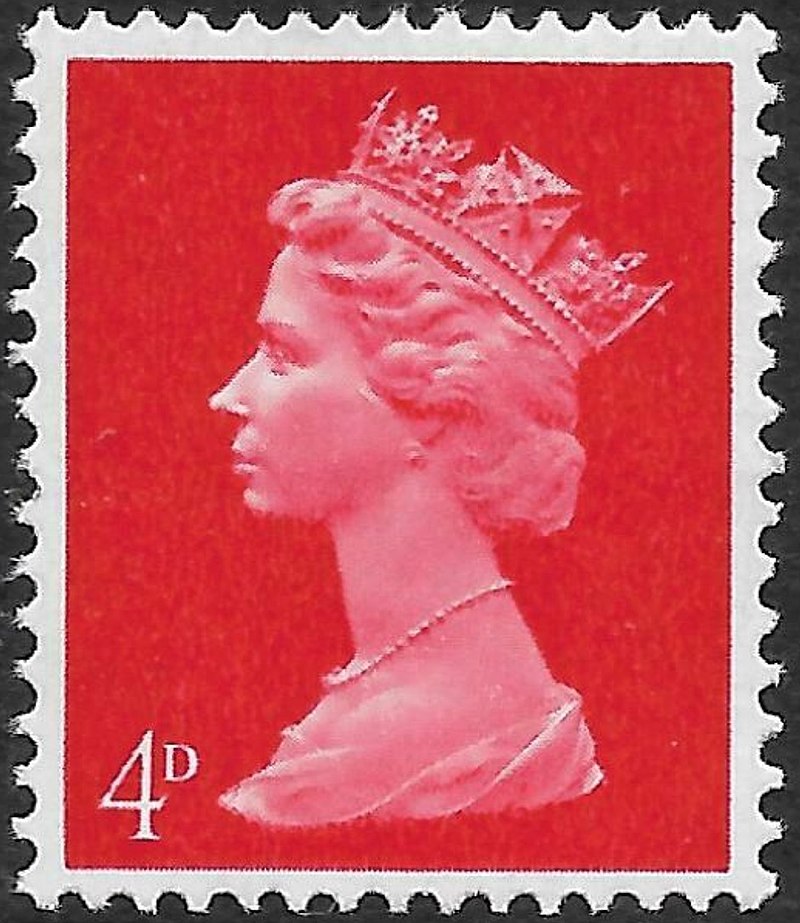
In the United Kingdom, the Machin series has been the main definitive stamp series for most of Queen Elizabeth II’s reign, from 1967 until her passing in 2022. Introduced on June 5, 1967, it replaced the Wilding series and featured a sculpted profile of the Queen. The series has undergone numerous changes and innovations in British stamp printing, encouraging a specialised philatelic collectors’ market.
The Machin Series (1967–2022)
Introduced June 5, 1967, Arnold Machin’s sculpted profile of the Queen became one of the longest-running definitive designs in the world.
Evolution & Security Features
- Decimalisation shift in 1971; non-value indicator (NVI) formats (“1st”, “2nd”) introduced in 1989
- Elliptical perforations added in April 1993 to deter forgery; replaced traditional perfs on all values thereafter.
- Self-adhesive backing debuted in October 1993
- Security backing paper with repeating “ROYAL MAIL” text since 2016
- Barcode technology and typographic source codes introduced from 2022, including year and printer encoding to trace batches.
Philatelic study of the Machin series is advanced: Douglas Myall’s Complete Deegam Machin Handbook remains the definitive catalogue with over 5,000 variants recorded based on printer, shade, perforation, gum type, phosphor tagging, and code identifiers
Examples of Definitive Stamps
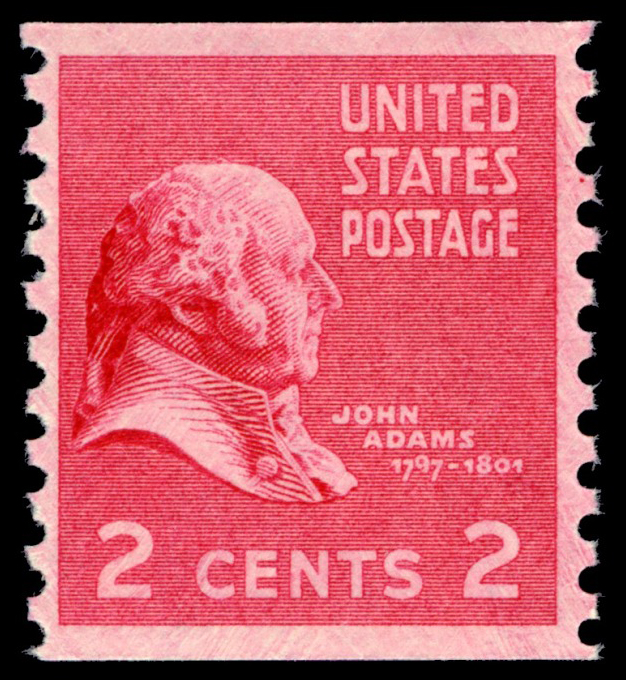
 US: John Adams from the Presidential Series
 Queen Elizabeth II 4d Machin stamp
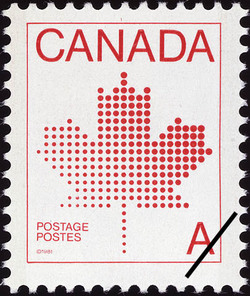
 Canada: ‘A’ Maple Leaf definitive
- The United States Presidential Series of definitive stamps features portraits of all 46 U.S. presidents.
- The Great Britain Machin definitives feature a simple profile of the reigning monarch and are one of the longest-running stamp designs in history.
- The Canada Maple Leaf definitives feature a stylised image of a maple leaf, used for everyday postage.
Collector Value, Security Features & Grading Definitive Stamps
When evaluating the collectible value of definitive stamps, condition is as important as design variants. Paper quality, watermark clarity, and the presence of tagging or barcodes play a major role. For U.S. series like Washington–Franklin, differences in watermark type, shade, printing press, and perforation can transform a common stamp into a specialized rarity.
British Machins require even more detailed assessment, including the presence of elliptical perforation, phosphor bands, polymers, gum type, and barcode inclusion. Reference catalogues such as the Stanley Gibbons Decimal Machin Catalogue, Scott Specialized Catalogue, and Warwick & Warwick price guides outline these parameters and assign value tiers accordingly.
How to Assess Condition & Value
Collectors consider:
Catalog reference: Stanley Gibbons (notably the Decimal Definitive Catalogue) for UK Machins; Scott Catalogue for U.S. mysteries; Warwick & Warwick price guides for condition-based valuation
Physical condition: Gum condition, perforation integrity, margins, absence of damage
Printing traits: Shade, watermark, tagging or barcode type
Summary of Key Definitive Stamp Features (SEO-Friendly Table)
| Region | Notable Series | Duration | Varieties & Features |
|---|---|---|---|
| U.S. | Washington–Franklin, Prexies, Forever | 1847–present | Watermarks, perforation changes, shade variants, Forever format |
| U.K. | Wilding (1952–67), Machin (1967–2022) | 50+ years | Barcode, elliptical perfs, phosphor, printer codes, over 5,000 variants |
Why Collect Definitive Stamps?
Definitive stamps are a great starting point for beginners. They’re usually cheaper than commemoratives and much easier to find, especially in everyday post. Because they’re printed in large quantities and stay in circulation for years, they show up often in bundles and mixes. Many are reprinted with small changes to things like colour or perforations, which makes them ideal for learning how to spot subtle differences.
If you’re just getting started with stamp collecting, definitive stamps are a fun and affordable way to build your knowledge and your collection at the same time.
Sources used in this post
- Washington–Franklin Issues – Wikipedia
- 1912 Franklin Issue Overview – MysticStamp
- A Closer Look at Definitive Stamps – MysticStamp
- Washington–Franklins Identification Guide – Memphis Stamp Club
- Machin Series – Wikipedia
- List of Machin Stamps – Wikipedia
- Royal Mail Issues Barcoded Machins – Linn’s Stamp News
- Royal Mail: Know Where Your Old Stamps Are? – Official Info
- The History of the Machin, the Legacy of the Barcode – Albany Stamps
- Arnold Machin – Wikipedia
- Perforation Gauge – Wikipedia
